Introduction
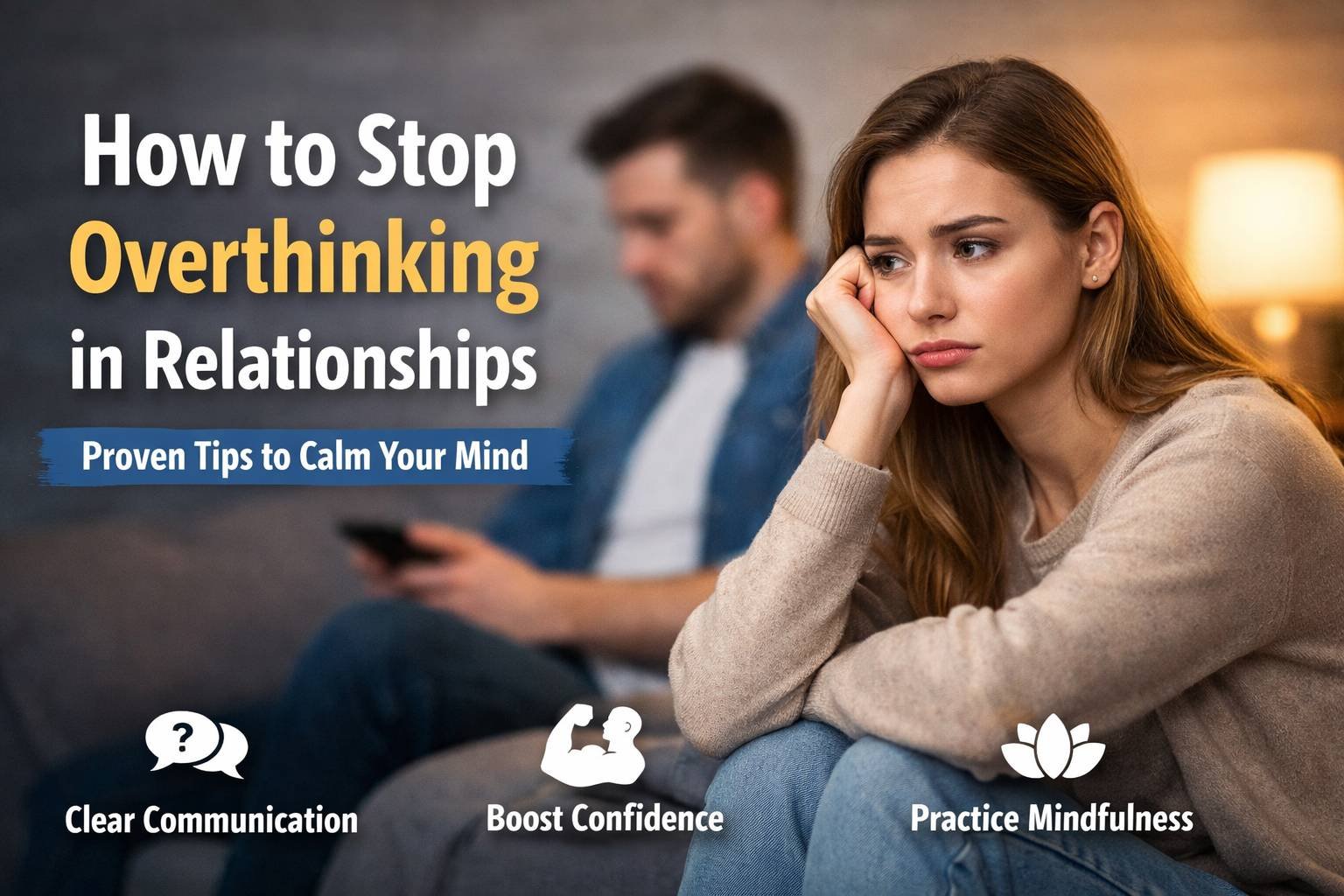
Overthinking is one of the biggest relationship killers. You replay conversations, doubt intentions, and imagine worst-case scenarios that may not even be real. In modern dating—especially in the USA where communication styles vary widely—overthinking can quickly turn a healthy connection into stress and confusion.
The good news? You can control it.
This guide will help you understand why you overthink and how to stop it—practically and effectively.
What is Overthinking in a Relationship?
Overthinking means analyzing situations excessively, often creating problems that don’t actually exist.
Examples:
- “Why did they reply late?”
- “Did I say something wrong?”
- “Are they losing interest?”
This constant mental loop drains your energy and creates unnecessary anxiety.
Why Do People Overthink in Relationships?
Lack of Communication
When communication is unclear, your brain fills the gaps with assumptions.
Fear of Losing the Person
You start overanalyzing because you don’t want things to go wrong.
Low Self-Confidence
If you don’t feel secure in yourself, you’ll constantly question your partner’s feelings.
Past Relationship Trauma
Bad past experiences can make you expect the worst again.
Signs You’re Overthinking Too Much
- You constantly check your phone for messages
- You assume negative outcomes without proof
- You replay conversations again and again
- You feel anxious without any real reason
If this sounds familiar, it’s time to fix it.
How to Stop Overthinking in Relationships
1. Focus on Facts, Not Assumptions
Instead of guessing, ask yourself:
- What actually happened?
- Do I have proof, or am I imagining things?
👉 Most of the time, overthinking is based on assumptions, not reality.
2. Communicate Clearly
If something bothers you, talk about it.
Instead of:
❌ “They must be ignoring me”
Say:
✔️ “Hey, I felt a bit off when you didn’t reply earlier. Everything okay?”
Clear communication reduces confusion instantly.
3. Stop Mind Reading
You are not a mind reader—and neither is your partner.
Assuming what they think or feel creates unnecessary problems.
4. Build Self-Confidence
The more confident you are, the less you overthink.
Work on:
- Your goals
- Your fitness
- Your social life
A strong personal life = a healthier relationship.
5. Set Mental Boundaries
Give your mind limits.
Example:
“I will think about this for 10 minutes, then move on.”
This prevents endless overthinking loops.
6. Stay Busy and Productive
Idle time fuels overthinking.
Do things like:
- Exercise
- Learn new skills
- Spend time with friends
A busy mind has less space for unnecessary thoughts.
7. Accept Uncertainty
No relationship is 100% predictable.
Trying to control everything creates stress. Learn to accept that some things are out of your control.
8. Practice Mindfulness
Simple techniques like deep breathing or meditation help you stay in the present moment instead of overanalyzing the past or future.
Common Mistakes to Avoid
- Overchecking texts and social media
- Asking for constant reassurance
- Jumping to conclusions
- Ignoring your own life and focusing only on the relationship
Final Thoughts
Overthinking doesn’t protect your relationship—it harms it.
Healthy relationships are built on:
- Trust
- Communication
- Emotional stability
The moment you stop assuming and start communicating, everything becomes easier.